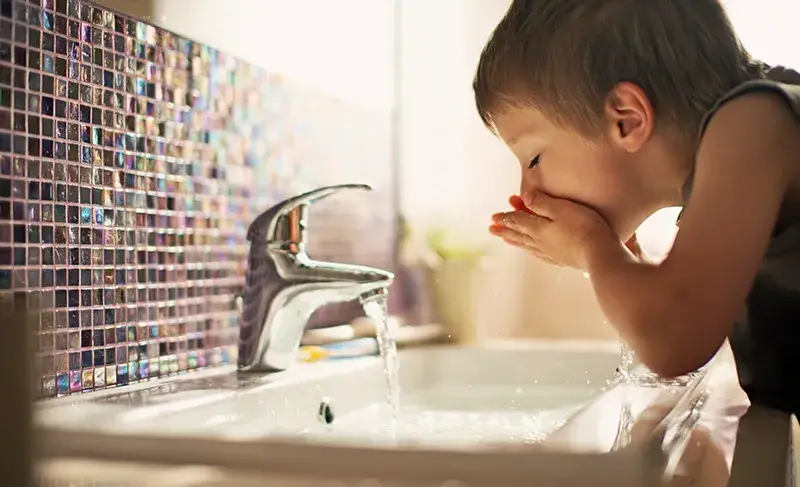
Cold water often feels fresher and lighter, so many homeowners assume it contains less limescale. But the truth is simple:
Cold water contains hardness minerals – and once heated, it creates limescale everywhere in your home.
Whether you live in Dublin, Kildare, Meath, Cork, Galway, or Limerick, hard water is extremely common in Ireland. Understanding how hardness behaves is essential to protecting your home, your appliances, and your energy bills.
Cold Water Contains Hardness Minerals – Even If You Don’t See Limescale Yet
Cold water in Ireland naturally contains dissolved calcium and magnesium. These minerals are invisible, tasteless, and safe to drink — but they are the raw ingredients of limescale.
Cold water doesn’t immediately leave white marks because limescale forms only when water is heated.
What happens when cold water is heated?
When cold water enters your boiler, kettle, washing machine, or dishwasher, the minerals crystallise into calcium carbonate, forming the hard white scale you see on:
- Showerheads
- Taps and sinks
- Kettles
- Heating elements
- Dishwashers and washing machines
- Hot water cylinders
This is why cold water must be softened before it reaches your heating system.
Heating Hard Water = Instant Limescale
Every appliance that heats water is at risk. Even 1 mm of limescale on heating elements can increase energy consumption by 10-12%, making your home less efficient.
Effects of heating hard water
- Higher electricity bills
- Reduced boiler efficiency
- Shorter lifespan of appliances
- More frequent breakdowns
- Rough laundry and faded clothes
- Dry skin and dull hair
- Soap and detergents becoming less effective
Softening only hot water does not solve the problem — because hardness originates in the cold water supply.
Why Softening Cold Water at the Point of Entry Is Essential
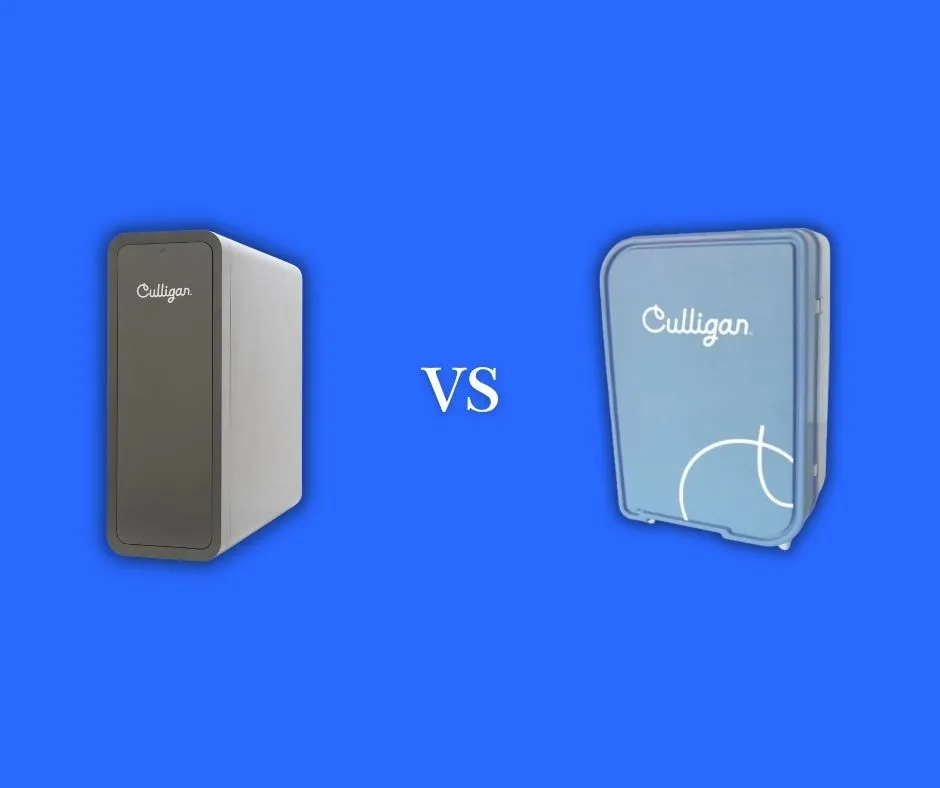
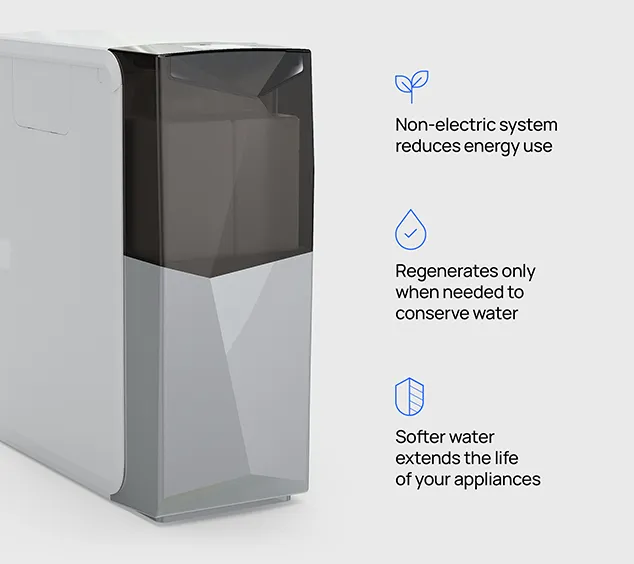
A Culligan water softener installed at the main cold-water entry point ensures that all water entering your home is softened before it reaches any appliance.
Benefits of softening cold water
- Protects your boiler, immersion, and heating system
- Prevents limescale buildup in appliances
- Reduces energy consumption
- Keeps taps, showers, and plumbing free from scale
- Makes cleaning easier
- Leaves skin and hair feeling softer
- Reduces detergent and cleaning product usage
- Extends the lifespan of household appliances
Softening cold water is not about taste- it’s about preventing limescale before it forms.
🇮🇪 Ireland-Specific Insight: Hard Water Is Increasing
Many Irish households have noticed worsening limescale in recent years. This is due to:
- Increased reliance on groundwater sources
- Mineral-rich limestone geology
- Expanding urban water networks
- Seasonal changes in water supply
This makes a whole‑home softener more important than ever.
Expert Tip
If you only soften hot water, the cold water feeding your boiler and appliances will still create limescale once heated. Softening at the cold-water entry point is the only complete solution.
📞 Want to Remove Limescale Permanently?
Culligan offers:
- Free home water tests
- Professional installation
- Ireland-specific water expertise
- Long-term servicing and support
You can request a quote or book a consultation anytime.
FAQ Section
Does cold water contain limescale?
Cold water contains hardness minerals but does not form limescale until heated. Once heated, it creates scale inside boilers, kettles, and appliances.
Why can’t I soften only hot water?
Because hardness originates in the cold water supply. Softening only hot water leaves your boiler and appliances exposed to limescale.
Is softened cold water safe to drink?
Yes. Softened water is safe for drinking, cooking, and everyday use. If you prefer unsoftened drinking water, Culligan can install a bypass tap.
Will a water softener reduce my energy bills?
Yes. Removing limescale improves boiler efficiency and reduces energy consumption by up to 10-12%.
How do I know if my water is hard?
Signs include white marks on taps, rough laundry, frequent kettle descaling, and higher energy bills. Culligan offers free water testing.
Does Ireland have hard water?
Yes. Many counties – including Dublin, Kildare, Meath, Louth, Cork, and Galway — have moderate to very hard water.