Why water softener service matters in Ireland
If your Eircode puts you in an area with hard water, you may already know the familiar signs: white limescale around taps, marks on shower screens, a kettle that needs regular descaling and appliances that seem to need more cleaning than they should.
Hard water is very common in Ireland. Uisce Éireann explains that hardness comes from naturally occurring minerals, particularly calcium and magnesium, and that the hardness of the supply varies depending on local geology. You can even check your local water hardness using your Eircode.
A water softener can make a noticeable difference by reducing the minerals responsible for limescale. But buying and installing a softener isn’t the end of the story.
Like other equipment that works every day, a water softener benefits from professional attention.
That’s where water softener service comes in.
Culligan recommends servicing water softeners once a year to help maintain performance and avoid potentially costly problems. The current Culligan Ireland annual service is listed at €180 including VAT, and includes standard drinking-water tap maintenance.
For a homeowner who has invested in a water softener, an annual check can therefore be a relatively straightforward way of protecting that investment.
Ireland’s hard water makes maintenance worth considering
Hard water isn’t considered a health risk at the levels normally found in Irish drinking water. Uisce Éireann states that hard water is common in Ireland and that its mineral content isn’t harmful to health.
The issue is primarily practical.
When hard water is heated, it can form limescale. This can affect kettles, appliances and hot-water systems, while hard water can also reduce the effectiveness of soaps and detergents.
A properly operating softener helps tackle this problem throughout the home.
However, the softener itself has to remain in good working order.
That means checking the system, monitoring performance, maintaining the relevant components and making sure consumables such as salt are suitable and available.
What is a water softener service?
A professional water softener service is essentially a health check for your system.
Rather than waiting until your water becomes hard again or the machine develops a fault, a technician can assess the equipment before a small issue becomes a larger one.
Depending on the system, servicing may involve checking operation, inspecting components, assessing regeneration and identifying signs of wear, leaks or other issues.
The benefit isn’t simply that someone has looked at the machine.
The real benefit is confidence that the equipment responsible for treating your household water is being properly maintained.
How Culligan’s Annual Water Softener Service Works
1. Book the service at a convenient time
Culligan’s Irish service process is designed to be straightforward.
The current annual water softener service can be booked online. After payment, Culligan says it will contact the customer within 48 hours to arrange a suitable time slot and discuss the machine and its requirements.
This matters because servicing shouldn’t feel like another major household project.
For most homeowners, the goal is simple: arrange the visit, have the equipment checked and get back to enjoying softened water.
What happens during the service?
The exact work depends on the machine and its condition.
Culligan’s Irish service information states that the standard annual service includes drinking-water tap maintenance. It also makes clear that more complex or specialised systems may require additional work and charges.
This is an important distinction.
A responsible service isn’t about promising that every machine will need exactly the same work. Different softeners have different designs, ages, operating conditions and maintenance requirements.
A professional assessment allows the technician to identify what your particular system needs.
2. Performance is checked before problems become expensive
One of the biggest advantages of preventative servicing is timing.
A softener that has stopped working completely is much more inconvenient than one where a developing issue is identified during routine maintenance.
For example, a homeowner might notice that the water doesn’t feel quite as soft as before. They may assume the salt needs topping up, when the underlying issue could require further investigation.
A service gives a trained technician an opportunity to assess the system rather than relying on guesswork.
This is especially useful for older installations.
3. Your service can include drinking-water tap maintenance
Culligan’s annual softener service includes standard drinking-water tap maintenance.
That creates additional value for homes where the softener and drinking-water equipment form part of the same overall water-treatment setup.
Water filtration equipment also has its own maintenance requirements.
Culligan’s water filter service guidance recommends servicing filtration equipment at least once a year and notes that filter units should be changed by trained technicians to reduce the risk of leaks or bacterial growth.
This is particularly relevant if your home has more than one water-treatment product.
4. The service is about prevention, not just repair
It’s easy to think of servicing as something you do only after something goes wrong.
The better approach is preventative.
A regular service can help identify problems while they’re still manageable. It can also give homeowners a clearer picture of the condition of their equipment.
That’s useful because water treatment systems aren’t decorative purchases. They operate behind the scenes every day.
Your softener processes water whenever your household uses showers, washing machines, dishwashers, taps and other water-consuming appliances.
Three practical reasons to service annually
- Maintain performance – regular checks can help keep the system operating as intended.
- Identify developing problems – potential issues can be investigated before they become disruptive.
- Protect your investment – preventative care can help you get more value from equipment you’ve already purchased.
3 Powerful Benefits of Professional Water Softener Service
Benefit 1: Protect consistent soft-water performance
The biggest reason to maintain a softener is also the simplest: you bought it to provide softened water.
A properly maintained system is better positioned to continue doing its job.
Culligan’s Irish product range includes systems designed specifically for hard-water conditions in Irish homes. For example, the Culligan HE Water Softener is described as a high-efficiency system designed for Irish homes with hard water, with meter-controlled regeneration and low salt usage.
But even efficient equipment benefits from sensible maintenance.
Think of it in the same way you would think about a boiler, car or heating system.
You don’t necessarily wait for complete failure before considering its condition.
The same principle can apply to water treatment equipment.
Benefit 2: Help protect appliances from limescale
Limescale is one of the most visible consequences of hard water.
Uisce Éireann explains that when hard water is heated, calcium deposits can form limescale. It can build up in kettles and appliances and may also affect hot-water systems.
A functioning softener reduces the hardness of water supplied around the home, helping to reduce the conditions that cause limescale.
That can mean less time spent cleaning white deposits and descaling appliances.
It can also help protect an investment that extends far beyond the softener itself.
Think about how many household appliances use water:
- Dishwasher
- Washing machine
- Kettle
- Shower
- Boiler and hot-water equipment
- Coffee equipment
- Taps and plumbing fixtures
The value of softened water therefore isn’t limited to the softener itself.
Benefit 3: Catch issues before they become major problems
A small problem is usually easier to deal with than a major failure.
Regular servicing creates an opportunity to identify issues such as unusual operation, leaks, component wear or other concerns.
That doesn’t mean every annual service will uncover a fault.
In fact, a straightforward “everything looks good” result can be exactly what a homeowner wants.
The point is to know.
What if your softener is already showing problems?
Don’t wait for the next annual appointment if the machine is clearly malfunctioning.
If you notice a sudden return of hard water, unusual noise, leaks, overflowing, abnormal salt consumption or another significant change, contact a qualified service provider.
Culligan also provides servicing for water filtration equipment, including water softeners and a range of other filtration systems.
Benefit 4: Support the long-term value of your equipment
Water softeners aren’t normally bought as short-term products.
They’re intended to become part of the home.
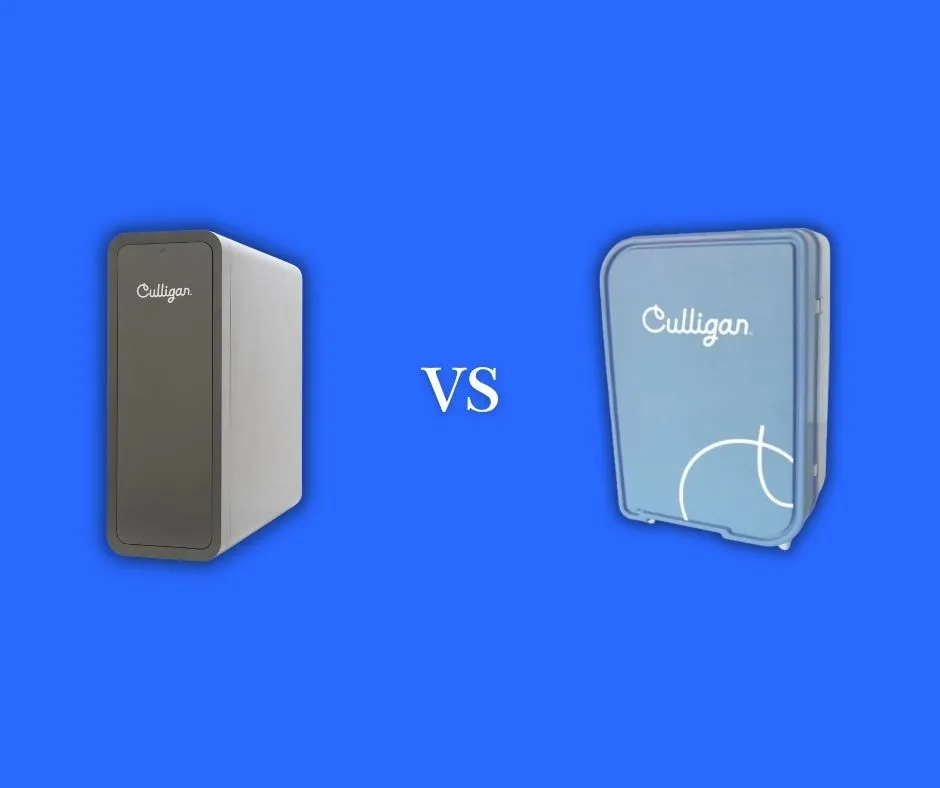
Culligan’s current Irish range includes systems such as the HE Water Softener, Minimax M3 and Arc Water Softener.
Some models have specific maintenance characteristics.
For example, the Minimax M3 is marketed as a low-maintenance system that uses block salt and smart metering to regenerate when required.
“Low maintenance” doesn’t necessarily mean “ignore it forever.”
Routine checks can still provide reassurance and help identify anything unusual.
Benefit 5: Keep consumables under control
Servicing is one part of maintaining a softener.
Consumables are another.
Salt is essential for many conventional water softeners because it supports the regeneration process.
Culligan’s Irish shop offers water-softener salt designed for different systems and highlights the importance of using suitable salt to help the softener operate effectively.
If you’re booking a service, it’s also sensible to check your salt supply.
Running out of the correct consumable can undermine the very system you’re paying to maintain.
Service + consumables = a more complete maintenance routine
A simple annual routine could look like this:
| Maintenance task | Suggested approach |
|---|---|
| Professional service | Annually |
| Check salt level | Regularly |
| Refill suitable salt | When required |
| Monitor water softness | Ongoing |
| Watch for leaks/noise | Ongoing |
| Replace filtration components | According to system requirements |
| Investigate unusual performance | Promptly |
The exact requirements vary by model, so always follow the manufacturer’s guidance.
What Does Culligan Water Softener Service Cost?
Current annual service price
At the time of writing, Culligan Home Ireland lists its Annual Water Softener Service at €180 including VAT. The standard service also includes drinking-water tap maintenance.
More complex or specialised systems may require additional work, which Culligan says can result in extra charges on the day.
That makes the decision relatively straightforward for many homeowners.
You’re not simply paying for someone to clean a machine.
You’re paying for professional attention to equipment that helps manage hard water throughout your home.
Is €180 worth it?
There isn’t one answer for every household.
It depends on the age and type of your system, its condition, how heavily it is used and how important consistent softened water is to you.
But preventative maintenance can make sense when you consider the alternative.
A neglected machine may eventually require repair or replacement.
A service doesn’t guarantee that nothing will ever go wrong. No responsible provider should promise that.
What it does is give you a regular opportunity to identify potential issues and maintain the system properly.
Service versus waiting for a fault
| Approach | Potential advantage | Potential downside |
|---|---|---|
| Annual service | Planned maintenance and early checks | Upfront service cost |
| Wait for failure | No scheduled service cost | Unexpected disruption and possible repair costs |
| DIY only | May seem cheaper | May miss technical issues |
| Professional service | Specialist assessment | Requires booking an appointment |
For homeowners who have already invested in a softener, annual servicing is therefore best viewed as investment protection, rather than simply another household bill.
Two Customer Stories: Why Preventative Service Matters
Customer story 1: The busy family home
Consider a typical four-person household in a hard-water area.
The family installed a water softener because they were tired of limescale on bathroom surfaces, taps and appliances.
For several years, the machine worked quietly in the background.
Because it wasn’t causing obvious problems, servicing kept getting pushed down the priority list.
Eventually, the family noticed that their water didn’t seem as soft as it had previously.
Rather than immediately replacing the machine, they arranged a professional service.
The technician was able to assess the system and identify what needed attention.
The lesson isn’t that every neglected softener will fail.
It’s that small changes in performance are worth investigating.
For a busy household, an annual appointment is often easier than discovering a problem when the family needs the system most.
Customer story 2: The older softener
Now consider a homeowner with an older water softener.
The machine still operates, but the homeowner notices occasional changes in performance and isn’t sure whether they’re normal.
Rather than guessing, they book a service.
The technician checks the equipment and explains its condition.
The homeowner now has useful information: what is working correctly, what should be monitored and whether any future maintenance may be required.
Again, this is an illustrative scenario rather than a named customer testimonial.
The important point is simple: professional servicing gives homeowners information they can’t always get from looking at the machine themselves.
Who Should Book a Water Softener Service?
Existing Culligan customers
If you already own a Culligan water softener, an annual service is a sensible way to keep your maintenance routine on track.
Homeowners with older softeners
Older systems can benefit from professional assessment, particularly if performance has changed.
People who have recently moved house
If you’ve bought a property with an existing softener and don’t know when it was last serviced, getting it checked can provide useful peace of mind.
Owners of other water-treatment equipment
Culligan’s Irish service team also services a range of filtration equipment and states that it can service many makes and models, including reverse osmosis systems, water softeners, water coolers, well-treatment systems, UV filters and water pumps.
That makes professional servicing relevant beyond softeners alone.
7 Signs Your Water Softener May Need Attention
Watch for changes such as:
- Hard-water symptoms returning.
- Unusual noises from the unit.
- Water leaks around the equipment.
- Unexpected changes in salt consumption.
- The system failing to regenerate as expected.
- Persistent limescale returning after previously being controlled.
- Uncertainty about when the system was last serviced.
One sign doesn’t automatically mean the softener needs replacing.
That’s precisely why diagnosis matters.
Don’t Forget the Salt and Other Consumables
A service can help maintain the equipment, but homeowners also need to maintain the consumables that the system relies on.
Culligan offers water-softener salt for different types of systems, helping customers keep their machines supplied with appropriate regeneration salt.
For households with a softener, keeping a reasonable supply available is a simple but important habit.
If you regularly forget to check the salt level, consider adding it to your normal household routine alongside checking cleaning products, dishwasher salt and other essential supplies.
Water Filter Servicing Is Important Too
A home may have more than one water-treatment system.
You might have a whole-house water softener alongside an under-sink drinking-water filter or reverse osmosis system.
These systems have different purposes, but both require appropriate maintenance.
Culligan recommends annual servicing for water filtration equipment and explains that filtration units need appropriate filter changes carried out by trained technicians.
If you have a drinking-water filtration system, you can learn more about Culligan’s water filter service and arrange an assessment.
Frequently Asked Questions About Water Softener Service
How often should a water softener be serviced?
Culligan Ireland recommends that water softeners should be serviced once a year to help maintain performance and avoid costly issues.
How much does Culligan’s annual water softener service cost?
Culligan Home Ireland currently lists its annual water softener service at €180 including VAT. Standard drinking-water tap maintenance is included. More complex or specialised systems may incur additional charges.
Does servicing mean my water softener won’t break down?
No service can guarantee that equipment will never develop a fault.
The purpose of preventative maintenance is to identify potential problems, maintain performance and give you a better understanding of the system’s condition.
Is hard water dangerous?
Uisce Éireann states that hard water isn’t harmful to health and that its minerals may even offer health benefits. The main concerns associated with hard water are practical issues such as limescale and reduced effectiveness of soaps and detergents.
Can I check how hard my water is?
Yes. Uisce Éireann allows homeowners to check their water hardness by entering their Eircode or address.
This is useful if you’re considering a water softener or trying to understand why limescale is a recurring problem in your home.
Do I need to service a low-maintenance water softener?
Low-maintenance doesn’t necessarily mean maintenance-free.
The correct service requirements depend on the specific model. Even where a manufacturer describes a system as low maintenance, professional inspection can provide reassurance and identify unusual issues.
Can Culligan service water filters as well as softeners?
Yes. Culligan states that it services a broad range of filtration equipment, including water softeners, reverse osmosis systems, water coolers, UV filters, well-treatment systems and other water-treatment equipment.
What if I didn’t buy my softener from Culligan?
Culligan’s Irish water filter service page states that its team services all makes and models of water filtration equipment and provides annual servicing for equipment installed by other companies as well.
If you’re unsure whether your particular system can be serviced, contact Culligan before booking.
Should I wait until my softener stops working before servicing it?
Generally, preventative maintenance is preferable to waiting for complete failure.
An annual check can help identify developing issues before they become more disruptive, although repairs can still be necessary when a problem has already developed.
Protect Your Water Softener Investment With Culligan
A water softener is a long-term investment in your home.
It can help manage the effects of hard water, reduce limescale and make everyday cleaning and maintenance easier. But the equipment itself needs sensible care.
For Irish homeowners, that starts with understanding your local water hardness, keeping the correct consumables available and arranging professional maintenance at appropriate intervals.
Culligan’s current Irish recommendation is simple: service your water softener once a year. The annual service is currently listed at €180 including VAT and includes standard drinking-water tap maintenance.
If your softener is due for its annual check, you can book Culligan’s Annual Water Softener Service and arrange a convenient appointment.
If you also have a drinking-water filtration system, book a Culligan Water Filter Service to keep your filtration equipment properly maintained.
And don’t forget the everyday consumables that keep your softener running. Explore Culligan’s water-softener salt range to find suitable options for your system.
Trusted Irish Water Information
For independent information about hard water, homeowners can check Uisce Éireann’s hard-water guidance, including the ability to check local water hardness using an Eircode.