
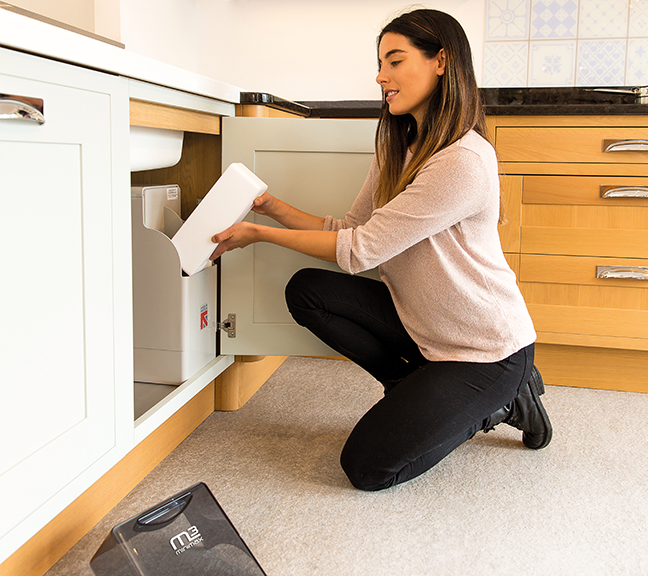
If you live in an area with hard water, you may notice limescale around taps, shower screens and kettles, as well as more frequent cleaning and descaling. This is caused mainly by minerals such as calcium and magnesium that occur naturally in hard water.
So, what is the best solution: a traditional salt-based water softener or a salt-free water conditioner?
The answer depends on what you want the system to achieve. A salt-based softener actually removes calcium and magnesium from the water, while a salt-free conditioner generally aims to reduce the formation of scale without removing those minerals.
For Irish homes with hard water, understanding this difference can help you choose the right system rather than simply choosing the product marketed as the most convenient.
What Is Hard Water?
Hard water contains naturally occurring minerals, particularly calcium and magnesium. According to Uisce Éireann, hard water is common in Ireland and is not considered harmful to health.
The main issue is what happens when hard water is heated or evaporates. Minerals can form limescale, which is why you may see white deposits inside kettles, around taps and on shower fittings.
Hard water can also make soap and detergents less effective, which can mean more cleaning and product use around the home.
Before choosing a water treatment system, it is worth checking the hardness of your local supply. Uisce Éireann provides information that allows households to check water hardness using their address or Eircode.
Salt-Based vs Salt-Free Water Softeners: What’s the Difference?
The simplest way to understand the difference is this:
| Salt-Based Water Softener | Salt-Free Water Conditioner | |
|---|---|---|
| Removes calcium and magnesium | Yes | No |
| Actually softens water | Yes | No |
| Main purpose | Reduce water hardness | Reduce scale formation |
| Uses salt | Yes | No |
| Requires regeneration | Yes | Usually no |
| Best suited to | Genuine water softening | Scale control without salt |
The terms can sometimes be confusing because products marketed as “salt-free water softeners” are often technically water conditioners.
If you are comparing systems, ask one simple question:
“Does this system actually remove calcium and magnesium?”
If the answer is yes, you are looking at a genuine softening process such as ion exchange.
How Does a Salt-Based Water Softener Work?
A conventional water softener uses a process called ion exchange.
Inside the softener are resin beads that attract calcium and magnesium from incoming hard water. The hardness minerals are captured by the resin and exchanged for sodium ions.
Once the resin becomes saturated, the system regenerates using a salt solution. This restores the resin so it can continue softening the incoming water.
The salt is therefore used primarily during the regeneration process rather than simply being added to your household water.
According to Culligan Ireland, its domestic water softeners use ion-exchange technology to remove calcium and magnesium from hard water.
What Are the Benefits?
The biggest benefit is that the water is genuinely softened.
Reducing calcium and magnesium can help reduce limescale throughout the treated water supply. You may notice less scale around taps and shower fittings, easier cleaning and less frequent descaling of appliances.
Softened water can also improve the performance of soaps and detergents, which is one reason many homeowners choose a water softener when hard water becomes a persistent household problem.
The technology is well established, and modern systems can automate much of the regeneration process.
What Are the Downsides?
The main consideration is ongoing salt use.
A salt-based softener needs the correct salt to regenerate its resin. How much salt you use depends on factors such as water hardness, household water consumption and the capacity of the softener.
There is also more installation and maintenance to consider than with some simpler scale-control systems.
For many homeowners, however, these are reasonable trade-offs for getting genuinely softened water.
How Does a Salt-Free Water Conditioner Work?
A salt-free conditioner takes a different approach.
Rather than removing calcium and magnesium, the technology is generally designed to reduce the tendency of those minerals to form scale.
This means the minerals remain in the water.
That can make salt-free conditioning attractive to homeowners who want to reduce scale but do not want to use salt or change the mineral content of their water.
However, it is important not to expect exactly the same result as an ion-exchange water softener.
A conditioner may help with scale, but it does not normally provide the same reduction in water hardness.
Is Salt-Free Better Than Salt-Based?
Not necessarily.
The better choice depends on your objective.
If your priority is actual water softening, a salt-based ion-exchange system is the more direct solution.
If your priority is scale control without salt, a suitable salt-free conditioner may be worth considering.
Think of it this way:
Salt-based softener = removes the cause of hard water.
Salt-free conditioner = manages one of the effects of hard water.
Neither option should automatically be described as better for every household.
Which Is Better for Irish Homes?
Ireland has many areas with hard water, but hardness varies between locations.
That is why the first step should be checking your local water supply rather than assuming that every Irish home has the same problem.
If your home has hard water and you regularly deal with limescale, a conventional water softener can provide a more complete solution because it reduces the calcium and magnesium responsible for hardness.
If your main concern is scale and you want to avoid salt, a salt-free conditioner could be an alternative.
Your household size also matters. A family using significantly more water will have different softening requirements from someone living alone.
Installation space is another consideration, particularly in smaller Irish kitchens.
What About Drinking Water?
A water softener and a water filter perform different jobs.
A softener is designed primarily to reduce hardness. It is not a general-purpose drinking-water purification system.
Uisce Éireann notes that chemically softened water may not be suitable for everyone, including certain infants and at-risk groups. (water.ie)
For this reason, some households choose to combine whole-home water softening with a separate under-sink filtration or reverse-osmosis system for drinking water.
Culligan Ireland offers both water softeners and drinking-water filtration and reverse-osmosis products, allowing homeowners to consider these requirements separately.
Which Culligan Water Softener Should You Choose?
If you decide that genuine water softening is right for your home, Culligan Ireland currently offers options including the Culligan Arc Water Softener and Minimax M3 Water Softener.
Culligan Arc Water Softener
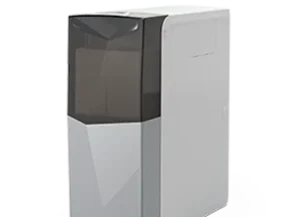
The Culligan Arc is a compact twin-tank water softener designed for domestic use.
It is designed to fit under the kitchen sink and uses non-electric operation. Its Smart monitoring features can help homeowners keep track of salt levels and manage replenishment.
The twin-tank design also allows the system to provide a continuous supply of softened water while regeneration takes place.
It can be a good option for homeowners who want compact installation combined with smart monitoring.
Minimax M3 Water Softener

The Minimax M3 is another compact Culligan water softener.
It uses a twin-cylinder design and operates without electricity using water pressure. The system uses block salt and is designed to provide continuous softened water.
Its compact design makes it particularly relevant for homes where available installation space is limited.
The choice between the Arc and M3 depends on your water hardness, household usage, available space and preferred features.
What Salt Does a Water Softener Need?
Salt-based softeners require the correct water softener salt for regeneration.
Culligan Ireland supplies both crystal and block salt for compatible domestic softeners, including products such as Culligan Care Crystals Water Softener Salt and block salt options. (culligan.ie)
Always check which salt format your particular softener requires.
Salt consumption varies between homes, so there is no single refill schedule that applies to everyone. Harder water and higher household water usage can generally increase regeneration and salt requirements.
Salt vs Salt-Free: Which Should You Buy?
Use this simple guide:
Choose a salt-based water softener if:
- You want to genuinely soften your water.
- Your home has significant hard-water problems.
- Limescale is a persistent issue.
- You want to reduce calcium and magnesium.
- You are comfortable replenishing salt.
Consider a salt-free conditioner if:
- Your main concern is scale.
- You do not want to use salt.
- You want to retain the natural minerals in your water.
- You understand that the water will not be softened in the conventional sense.
The most important thing is to match the technology to the problem.
The Bottom Line
So, salt vs salt-free water softeners: which is right for you?
If you want genuinely softened water, a salt-based ion-exchange water softener is the more direct choice because it removes calcium and magnesium.
If you mainly want scale control without salt, a suitable salt-free conditioner may be a better fit.
For Irish homeowners, start by checking your local water hardness through Uisce Éireann. Then consider your household size, water usage, available installation space and how much maintenance you are comfortable with.
If you decide that a conventional softener is the right solution, the Culligan Arc and Minimax M3 are two options available from Culligan Ireland.
And remember: the best water softener is not necessarily the one with the most features. It is the one that is correctly sized and installed for your water and your home.
FAQs
Is a salt-free water softener really a softener?
Usually, no. Many products described as salt-free softeners are technically water conditioners. They generally aim to reduce scale formation without removing calcium and magnesium.
Does a salt-based softener remove limescale?
A properly operating ion-exchange softener reduces the calcium and magnesium that cause hard-water scale. This can significantly reduce limescale formation in treated water systems.
How often do I need to add salt?
It depends on water hardness, household water usage and the softener itself. Culligan Ireland notes that salt requirements vary between homes, so the salt level should be monitored regularly.
Is softened water safe to drink?
Softened water can be suitable for drinking in some circumstances, but Uisce Éireann advises that chemically softened water may not be suitable for everyone, including certain infants and at-risk groups. Consider your drinking-water requirements before installation.
Which Culligan softener is best?
The Culligan Arc and Minimax M3 are both compact domestic water softeners. The best choice depends on your home’s water hardness, household usage, installation space and preferred features.
Editor’s Note
Editorial review: This article has been structured and fact-checked against current Irish and manufacturer information, including Uisce Éireann and Culligan Ireland. Product specifications, availability and pricing can change, so readers should verify the latest information directly with the manufacturer before purchasing.
Content principle: The article distinguishes clearly between water softening and water conditioning rather than treating “salt-free softener” and “salt-based softener” as identical technologies.
Sources and Further Reading
Irish water hardness information:
Uisce Éireann – Hard Water
Culligan Ireland – Water Softeners:
Culligan Ireland Water Softeners
Culligan Arc:
Culligan Arc Water Softener
Minimax M3:
Minimax M3 Water Softener
Water Softener Salt:
Culligan Ireland Water Softener Salt
Culligan Drinking Water Products:
Culligan Ireland Home Water Products