Which Culligan Water Softener Could Suit Your Home?
Once you have worked out your household size, water hardness and likely water consumption, the next question is naturally: which type of water softener should you choose?
There is no need to choose a system simply because it is the largest available. The better approach is to match the softener’s design and features to the way your household actually uses water.
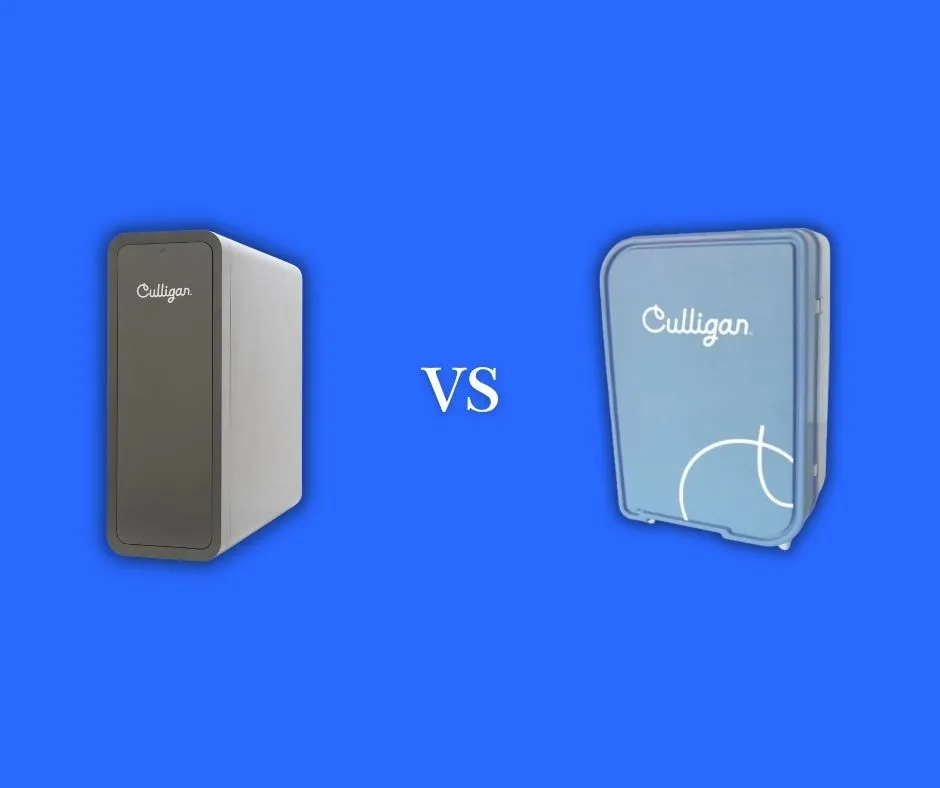
Culligan Ireland currently offers domestic options including the Culligan Arc Water Softener and Minimax M3 Water Softener, each designed with different household requirements in mind.
Minimax M3: A practical option where space matters
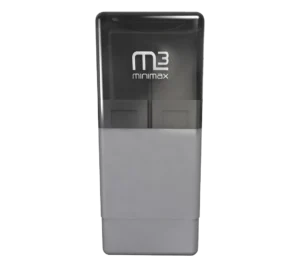
If you live in an apartment, smaller house or property where cupboard and utility space is limited, the Minimax M3 may be worth considering.
Its twin-cylinder design allows it to provide continuous softened water, while its compact, non-electric design means it can fit into tighter installation spaces. The unit is approximately 206 mm wide, 490 mm high and 460 mm deep.
That makes it particularly interesting for homeowners who may have thought:
“I’d like a water softener, but I simply don’t have room for a large system.”
The Minimax M3 also uses easy-load block salt, making ongoing salt replenishment straightforward.
It can therefore be a sensible option for smaller households, apartments and homes where keeping the installation footprint small is a priority.
Explore the Minimax M3 Water Softener
Culligan Arc: For convenience and connected control
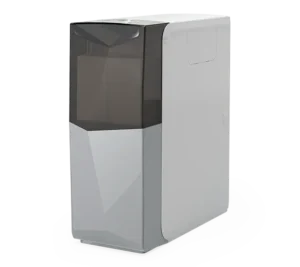
For households looking for additional convenience, the Culligan Arc Water Softener takes a slightly different approach.
The Arc uses twin-tank technology to provide a continuous supply of softened water. It is also designed to fit neatly beneath most kitchen sinks, which means homeowners do not necessarily need a dedicated utility room.
One of its more distinctive features is its connected salt-monitoring system. The Wi-Fi-enabled i-Lid and Smart app allow homeowners to monitor salt levels and receive support or reorder when required.
That could be particularly useful if you prefer a system that requires less day-to-day attention.
The Arc may therefore appeal to families and homeowners who want continuous soft water combined with greater visibility over salt levels and system operation.
See the Culligan Arc Water Softener
Which one should you choose?
Rather than deciding based purely on the number of people in your home, consider what matters most to you.
| Your priority | What to consider |
|---|---|
| Limited installation space | Minimax M3 |
| Compact, non-electric operation | Minimax M3 |
| Easy block-salt loading | Minimax M3 |
| Connected salt monitoring | Culligan Arc |
| Smart app convenience | Culligan Arc |
| Continuous softened water | Both systems use twin-cylinder/tank technology |
| Unsure which is suitable | Arrange a Culligan water analysis |
This is why water hardness and household usage should come before product selection. A softener should be chosen around your home rather than trying to make your home fit a particular softener.
Don’t Choose a Water Softener Based on Family Size Alone
It is tempting to search for something like “best water softener for a family of four” and immediately choose the first product labelled for four people.
But household size is only one part of the calculation.
A family of four in a two-bedroom home with one bathroom could have very different water requirements from a family of four living in a five-bedroom house with three bathrooms.
The second household may have:
- More simultaneous showers
- Greater peak water demand
- More appliance usage
- More frequent bathroom use
- Higher overall water consumption
At the same time, a two-person household with several bathrooms and frequent visitors could also have relatively high water demand.
That is why Culligan recommends considering water hardness, household size, water consumption and installation requirements when selecting a domestic water softener.
If you are uncertain about the hardness of your local supply, you can also use Culligan’s water hardness checker for your area or arrange a water analysis before deciding which system is appropriate.
Check your local water hardness
What If You Already Have Limescale?
If you are researching water softeners because your taps, shower screen, kettle or appliances are covered in white deposits, you are probably already seeing the effects of hard water.
Limescale is caused by minerals such as calcium and magnesium in hard water. When water is heated or evaporates, these minerals can leave deposits behind.
Rather than repeatedly cleaning the symptoms, a water softener tackles the hardness at the point where water enters the property.
Culligan’s guide to limescale looks at the difference between repeatedly removing deposits and addressing the underlying hard-water problem with a water softener.
Read: How to Remove Limescale from Your House – DIY or Water Softener?
This is a useful next step for readers who have reached your sizing article because they are already frustrated by limescale.
What Happens to Drinking Water After Softening?
Another question often comes up before purchasing a water softener:
“Can I drink softened water?”
This deserves a proper answer rather than a simple yes or no.
Water softeners work through ion exchange, replacing calcium and magnesium ions with sodium ions during the softening process. Culligan explains the process in detail and discusses the considerations surrounding drinking softened water.
If drinking water is an important consideration for your household, it is worth understanding how your plumbing will be configured before installation.
You can read more in Culligan’s dedicated guide:
Read: Is Softened Water Safe to Drink?
This is also a good place to introduce filtration or drinking-water solutions only if relevant to the reader, rather than presenting them as an automatic add-on.
Don’t Forget About Water Softener Salt
Choosing the right softener is only part of owning a water-softening system.
The system also needs the appropriate salt to regenerate its resin and continue removing hardness minerals from the water.
Culligan Ireland offers both crystal salt and block salt options for different softener systems. The current range includes Culligan Care Crystals and specific block-salt products designed for compatible systems.
The important point is to use the salt recommended for your particular softener rather than assuming every salt product is interchangeable.
Explore Culligan Water Softener Salt
For an SEO article focused on how to size a water softener, I would keep this section relatively short. It is a useful cross-sell, but it should not distract from the reader’s primary question.
What If You’re Still Not Sure Which Softener You Need?
This is where a free water analysis can be more useful than another hour of comparing product specifications online.
Your household’s ideal softener depends on more than the number of people living in the property. Water hardness, consumption, available installation space and your preferences around convenience all play a role.
Culligan Ireland offers a complimentary in-home water analysis and can assess the property before recommending a suitable system.
That means you do not necessarily have to work everything out yourself.
If you know your approximate household size and have an idea of your water usage, start there. Then let the water hardness and installation assessment help narrow down the options.
Request a free, no-obligation Culligan quote